
By Stephen Sciortino
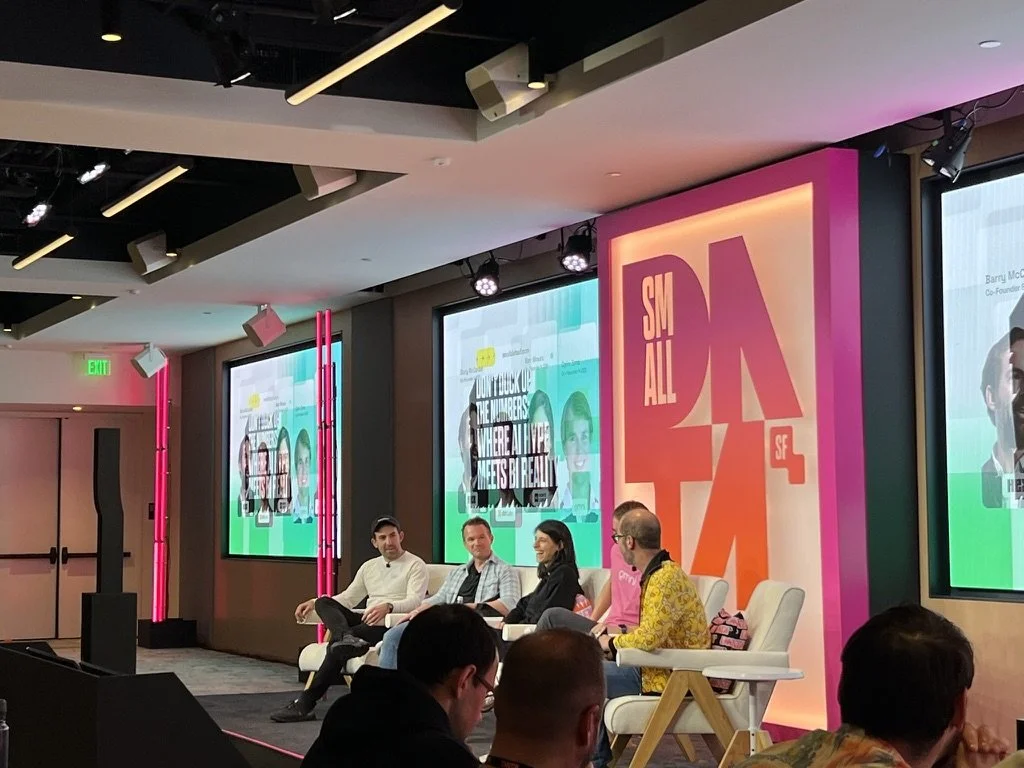
I’m heading back to San Francisco for Data Outpost, the MotherDuck event formerly known as Small Data SF. Last year I wrote an article about how MotherDuck was setting the stage to lead the small-data movement. I still think that’s true today, but there have been quite a lot of changes in this duck pond since Small Data in 2025. Here are a few of the stories that stood out to me in the past year.
DuckLabs is Acquired by AWS
In August 2026, DuckLabs announced they would be joining the AWS team. DuckLabs consists of the team that created DuckDB, the open-source, MIT-licensed, query engine. It has become a popular light-weight data processing engine, especially with users who were familiar with earlier alternatives like SQLite. Companies like MotherDuck were able to build on the DuckDB ecosystem, and provide a reliable cloud environment for users to host and run their DuckDB workloads. As a data engineer myself, I find myself using DuckDB all the time, both hosted in MotherDuck and locally on my laptop. So when Amazon announced that they were acquiring the team behind this product, I just hoped that the product would still continue to serve the same role in the data landscape that had been serving up to that point.
In the months since the announcement, it seems like nothing much has changed. The DuckLabs team is still shipping updates, including a major 2.0 release (more on that below). Their product is still open-source and MIT-licensed. It still provides the core that powers the MotherDuck platform. To my knowledge, AWS doesn’t offer a cloud-hosted DuckDB product. So for those of us looking in from the outside, not much has changed.
MotherDuck Releases Flights and Dives
MotherDuck released two major project features called Flights and Dives in 2026, which massively expand what it’s capable of.
Dives, announced back in February, adds visualization capabilities to MotherDuck. With it, you can create the traditional BI interfaces you’re used to seeing. Or if you’d prefer, you can build custom apps written in Javascript to display data with a more reactive UI. With both of these options, MotherDuck expanded into a platform that could display your data, not just host it.
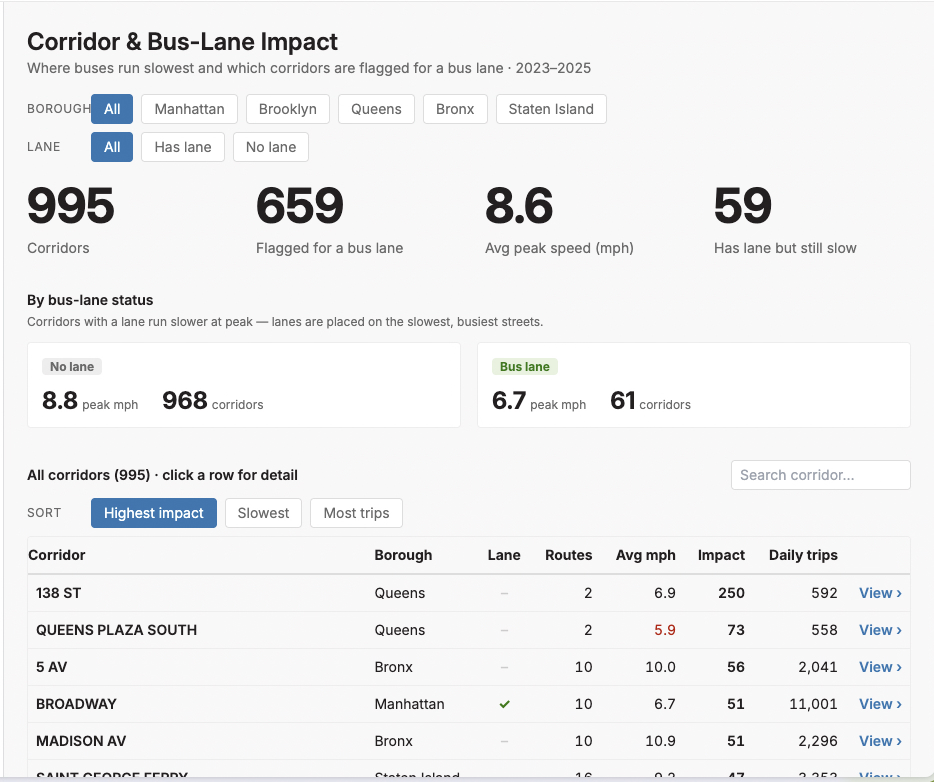
A screenshot showing an example of a Dive
In a similar way, MotherDuck released Flights to expand into the ingestion space. This took the form of a general purpose python runner, which could be easily used to run a framework like dlt to ingest data from a variety of sources. With that, MotherDuck closed the loop between ingesting data and displaying it to end users.
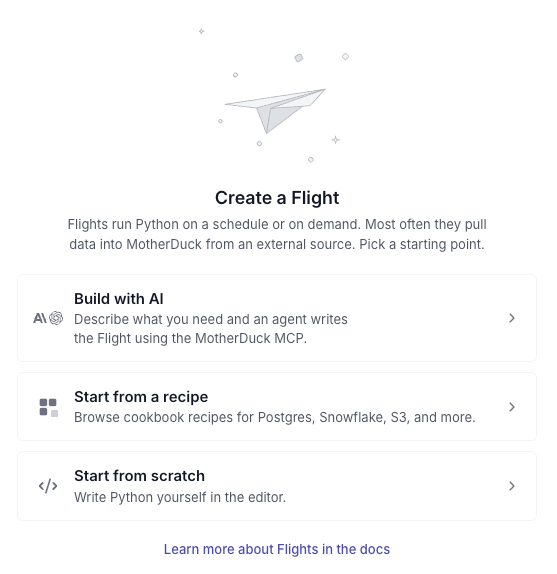
Options for creating a new Flight in Motherduck
DuckLabs Introduces DuckLake
While Polaris and Delta Lake were busy fighting for the Iceberg spotlight, DuckLabs released DuckLake - an open source data lake, built specifically for the DuckDB engine. It provided a quick and light way to start running queries on data stored in storage buckets. Shortly after that MotherDuck adopted support for it in it’s platform, making it easy to deploy an easy-to-query, cloud hosted endpoint for accessing your cloud buckets.
DuckDB Goes 2.0
In the most recent announcement of all, DuckLabs released DuckDB 2.0, affectionately named Cinnamon Teal or Spatula Cyanoptera for all the Wingspan fans. With this release announced by the team as “above all, a feature release”, 2.0 introduces a plethora of new features.
The best known photo of a Spatula Cyanoptera, to date
Quack (the product that allows DuckDB to run as a server for other DuckDB clients) gets an upgrade with the “Connect” statement, making it easier to quickly connect to remote quack instances.
Variant becomes a datatype, enabling nested, semi-structured datasets like JSON to be stored in a DuckDB table as a column. Engines like Snowflake have had this for several years, and it enables powerful workflows like ingesting a webhook with a payload directly into your warehouse, rather than processing it externally before loading it in a tabular format.
They added an Agent mode, which is a sensor by the DuckDB cli that can determine when it’s being operated by an agent harness. It reactively changes its output type and helps to prevent the agent from going hogwild on the compute in your account.
Extensions and Triggers will add additional functionalities as well, including better support for Delta tables and enhanced control logic for running code before or after given tables are updated.
Conclusion
With everything that has changed in the past year, it seems reasonable to me that we’ve moved on from the Small Data moment. Not because the data has gotten much bigger, but because the focus has shifted back to building. The new tools produced by both DuckLabs and MotherDuck are pushing the small data stack into the front-lines of production work.
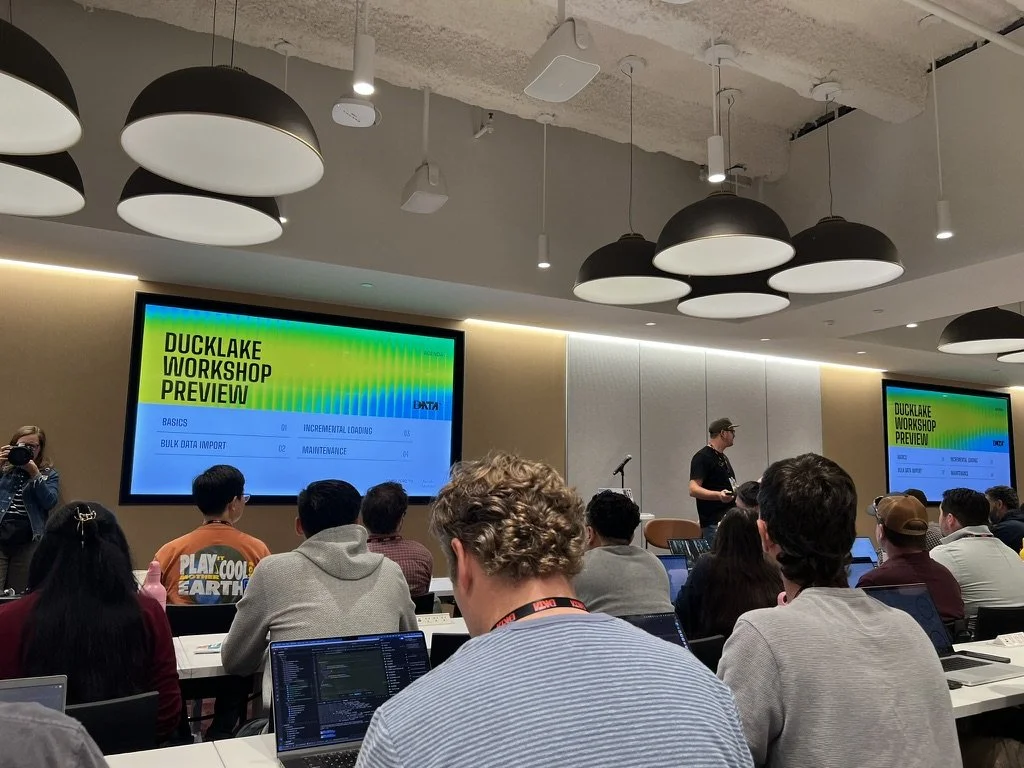
If you’ll be at the conference this week, I’d love to hear what you think about all the changes from this past year. Come find me at the event and lets talk about which tools you’ve been using in your workloads.
Next Read: A Deep Dive on MotherDuck
If this post sparked your interest, check out our full review of Motherduck: